On-Ground Surveys
What Are On-Ground Surveys?
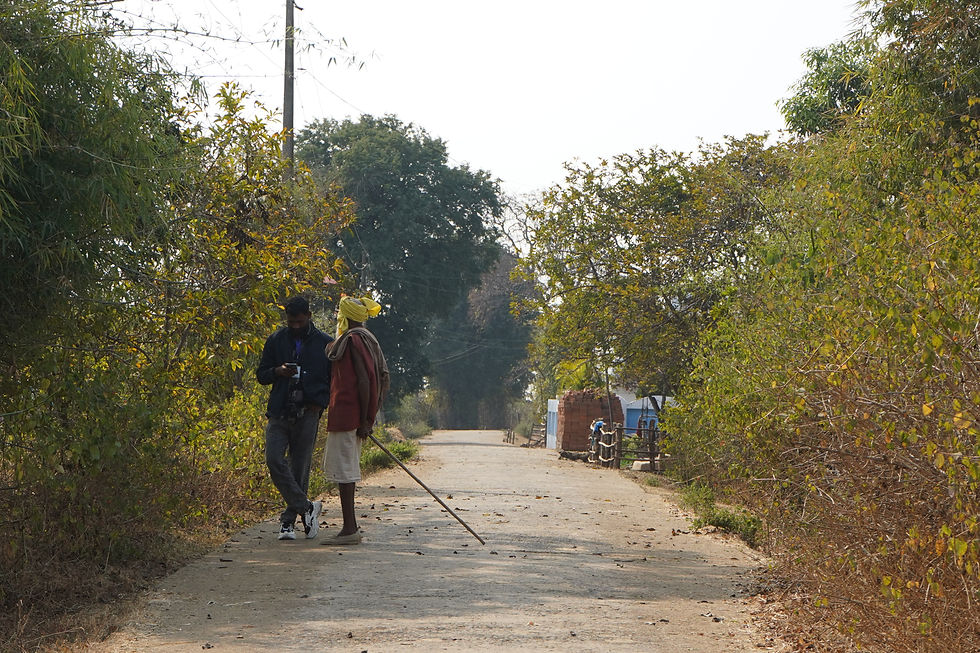
NCCI’s on-the-ground surveys examine how agricultural and livelihood interventions are being adopted, experienced, and used by communities in Central India. By tracking changes in production, income, food consumption, food security, and wellbeing over time, these surveys build evidence to help strengthen programmes and inform future priorities.

Surveys So Far
Our surveys cover villages across Mandla and Balaghat districts in Madhya Pradesh, including Mawai, Mukki, Nainpur, and Narayanganj, as well as Kabirdham district in Chhattisgarh.
Pilot surveys were conducted in October 2022, with baseline surveys being conducted in March 2023, followed by Year 1 surveys in January 2024, across 90 villages in four clusters: Mawai, Mukki, Nainpur, and Narayanganj. Repeated household surveys help us understand how experiences and outcomes change over time, alongside differences across locations and intervention approaches. Currently, we are in our 5th year of these surveys.

Who Uses This Data?
The surveys are designed by researchers and experts within the NCCI team and implemented by a dedicated field survey team. The approach draws on the October 2022 pilot, secondary data, and insights from NGO collaborators working closely with communities.
Structured household surveys cover both treatment villages, where interventions are introduced, and control villages used for comparison. Statistical analysis and year-on-year comparisons help us assess adoption, examine differences, and track trends over time. Findings are discussed with NGO partners to support interpretation and programme refinement.
How We Work?
An important focus is understanding interventions that support millet production and use. NGO partners are working with communities to introduce improved seed varieties, strengthen farmer collectives and local entrepreneurship, and improve access to processing technologies that reduce labour and enhance millet quality.
Our surveys explore whether and how households adopt these interventions, farmers’ perceptions of their usefulness, and their relationship with changes in livelihoods and diets. We track:
-
Production and adoption: Millet cultivation, production practices, and uptake of interventions.
-
Livelihoods and income: Changes in household income and livelihood opportunities.
-
Food consumption and security: Dietary patterns, millet consumption, and household food security.
-
Wellbeing: How households experience changes in their everyday lives.

Why On Ground Surveys Count
Ground-level surveys help connect programme intentions with people’s experiences. They provide NGO partners with evidence on whether interventions are being used, what supports or limits adoption, and whether they are contributing to improved livelihoods and wellbeing.
NGO partners can use these findings to refine their tools, adapt implementation, and make informed decisions about expanding their work. For NCCI, the evidence informs future programme priorities and, alongside field observations and partner experiences, helps shape the questions explored through our roundtables.